

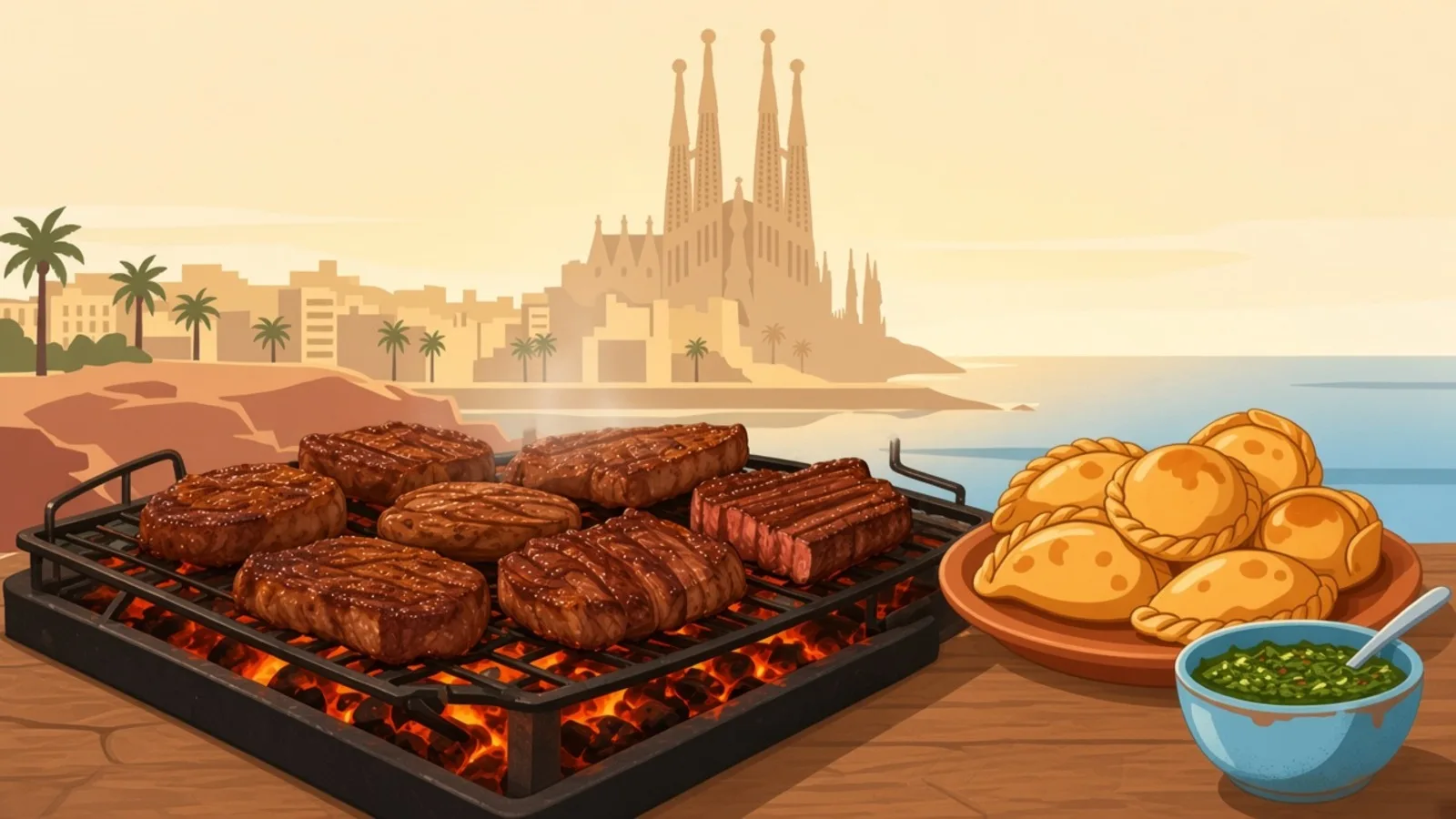
Argentine beef cuts on a Spanish menu: a field guide
Tano Villar’s October 2026 dawn tour of Argentine cuts is a vocabulary lesson. Entraña, vacío, ojo de bife, tira—what those names usually mean when you sit down in Spain.
The expensive mistake in an Argentine restaurant in Spain is pointing at “a steak” and waiting. The menu is a map of muscles, and they do not eat the same.
On 11 October 2026, Tano Villar published Me Levanté a las 5 AM para Probar TODOS los Cortes de Carne de Argentina (~685,000 views by 20 Oct 2026)—an hour-plus tasting. You do not need his dawn alarm. You need four or five names that actually appear in Barcelona and Madrid.
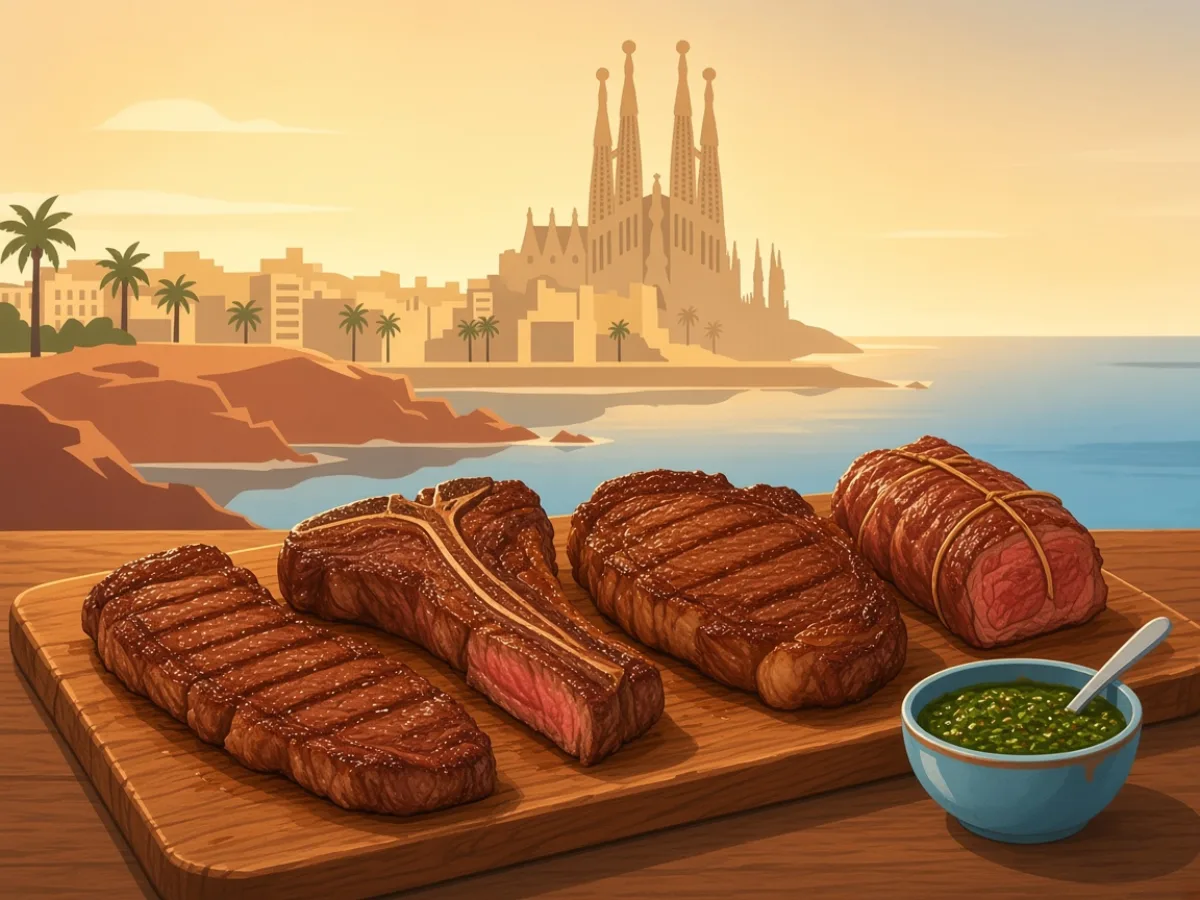
Five names that show up on Spanish menus
We will not dump his tasting notes. In Spain you will most often see:
- Entraña — thin, beefy, easy to overcook; ask for colour. The bait cut on Spanish listings.
- Tira de asado / asado de tira — short-rib energy; Spanish tira is often thinner than the Argentine Sunday cut. Ask about thickness.
- Ojo de bife — ribeye-ish; the steakhouse default. Compare price-per-kilo with the house bife de chorizo before assuming it is better.
- Vacío — thicker, needs rest; a tell that the kitchen is not only doing ribeye.
- Bife de chorizo — sirloin-shaped; not the sausage. The name confuses first-timers every night.
If the menu only says “Argentine steak,” you are in a translation. Ask which cut. Matambre, tapa de asado and cuadril show up on long menus; they are not interchangeable with entraña.
Empanadas, criollo sausage and morcilla sit beside the cuts. They are not “cuts,” but they tell you whether the grill is the point or an extra.
Grain of salt
A dawn marathon is not a Tuesday order. Argentine names and EU carcass cutting do not match 1:1. “Todos los cortes” is a thumbnail. Do not order seven cuts for two people. Tano’s tasting is vocabulary; your table is two textures and a spare.
Spain also imports boxes. A cut written in Argentine Spanish may be a Galician or Uruguayan muscle the kitchen is used to grilling. That is normal. What you want is a waiter who can say how this house cooks it—not a lecture on the pampas.
How to order without the 5 a.m. alarm
Pick two textures: one thin (entraña or tira) and one thicker (ojo or vacío). Share. If the table is mixed, add a milanesa so someone has a plan B. City guides already cluster Barcelona and Madrid listings by those keywords.
In Valencia or Málaga the same rule: name the muscle, not the country. Ask how this house cuts and cooks each one. A waiter who explains vacío without rushing is usually the same kitchen that does not rush doneness.
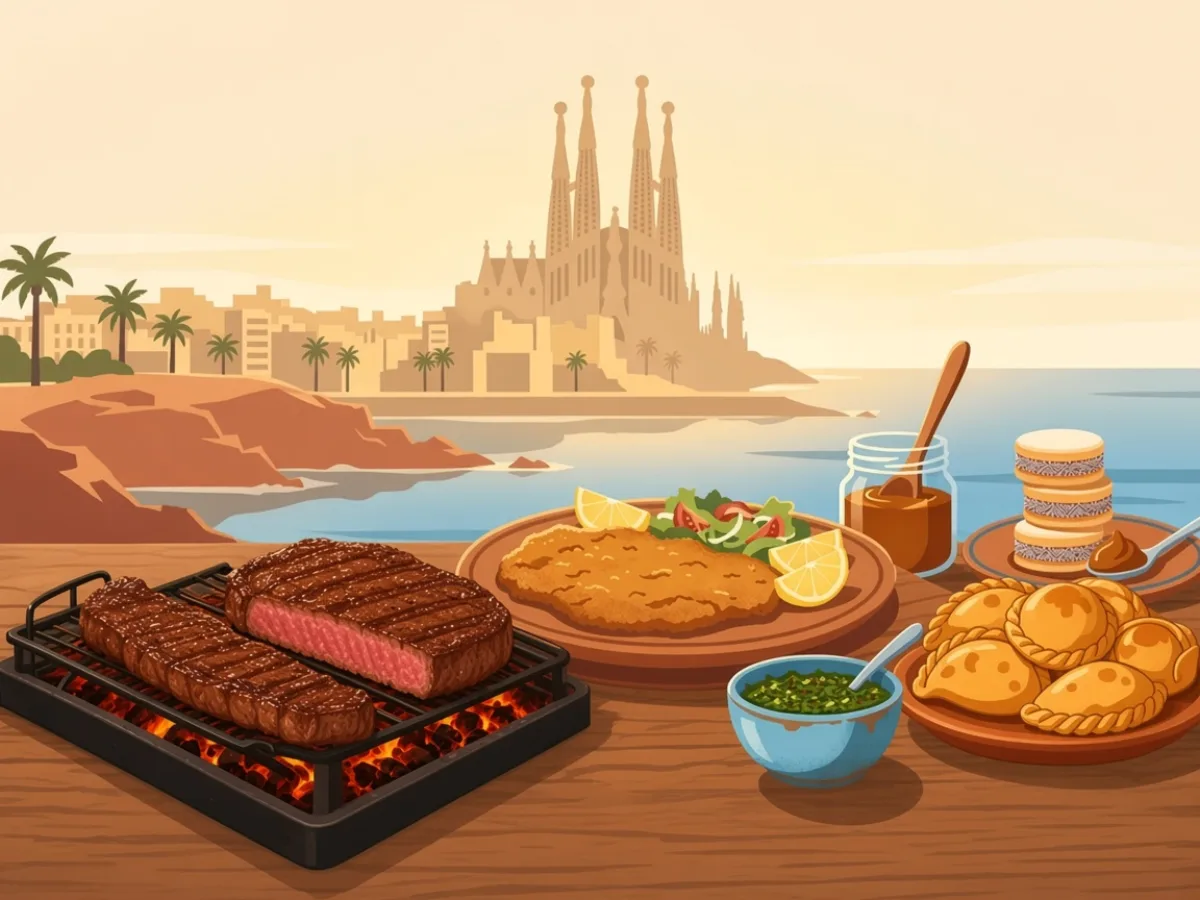
A two-person order that uses the vocabulary:
- Empanada or chorizo (salt test).
- Entraña, colour specified.
- Vacío or ojo de bife to share.
- One not-beef plate.
That is a field guide, not a butcher’s certificate. For pacing, see first asado. For everything that is not a muscle, see beyond the steak.
What “Argentine steak” usually hides
When a Spanish card refuses to name a cut, it is often one of three things:
- A generic ribeye they can buy from any supplier.
- A thin entraña they hope you will not compare.
- A mixed grill (parrillada) priced as a spectacle.
Ask. If they cannot answer, you still might eat well—you just cannot use this video’s vocabulary. The directory’s job is to show you rooms where the words on the menu match the fire.
Checklist
- Named cuts, not “steak argentino.”
- Two textures, not seven.
- Tira thickness question.
- Directory pin that mentions entraña or vacío in reviews.
- A waiter who can describe doneness in colour, not only “al punto.”
Source
- Video: Me Levanté a las 5 AM para Probar TODOS los Cortes de Carne de Argentina
- Channel: Tano Villar · 11 Oct 2026 · ~685,000 views (checked 20 Oct 2026)
Top Place Equipment


Argentine pantry & fan gear
Yerba mate, mate kits, Argentina football and basketball jerseys, and a soccer ball — plus pantry classics.
- Curated Argentine essentials
- Trusted brands
- Fast delivery
- Buyer reviews
Affiliate links open on Amazon.es. Prices and availability may vary.